Immediate Loading Without Compromise: The Truth About Same-Day Full-Arch Implants
"Same-day implants" makes people nervous, and I understand why. It sounds like a shortcut — like something that should take months being compressed into an afternoon because someone cut a corner. The reality is closer to the opposite: same-day, or immediate, loading is one of the more protocol-heavy things we do, not one of the less careful ones. The photos below are 15 days apart, and I want to be precise about what they actually show.
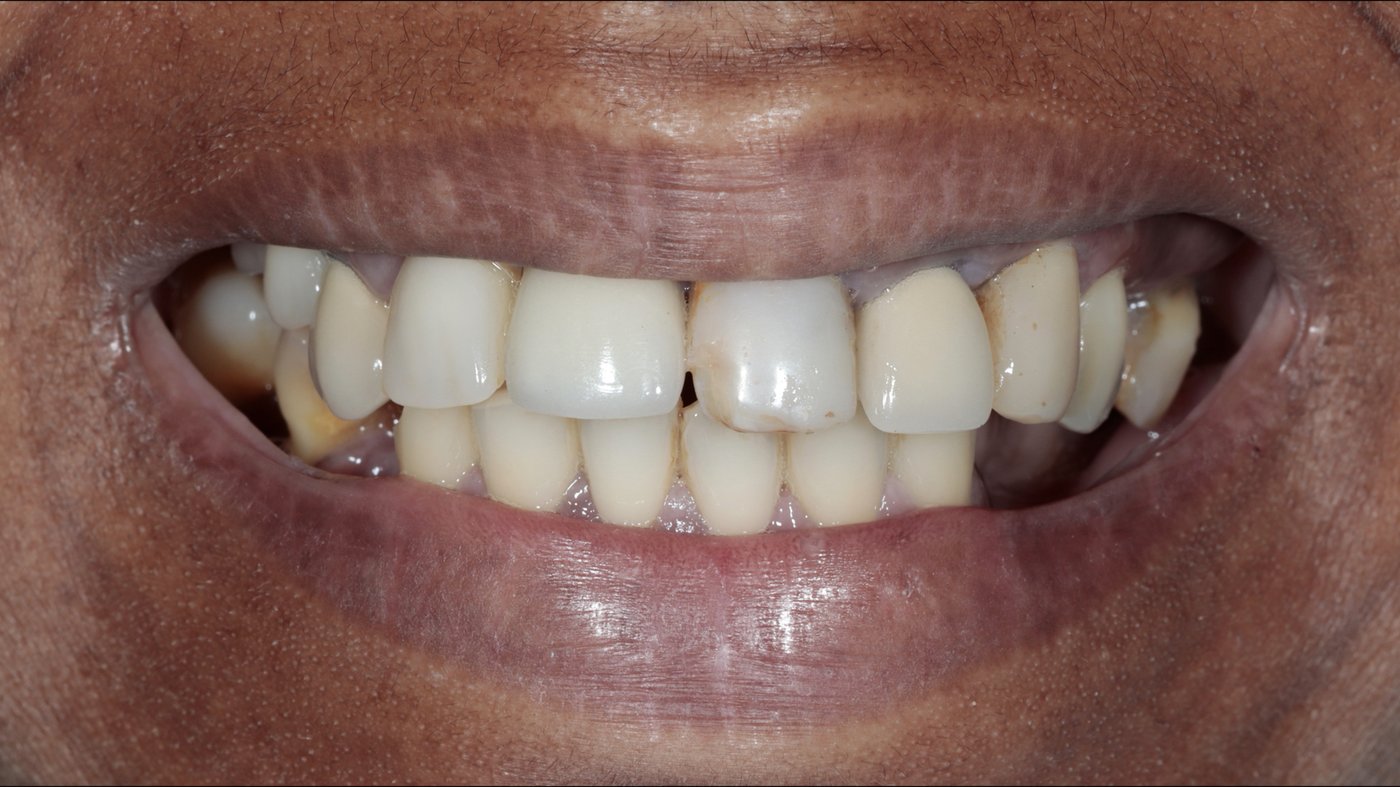
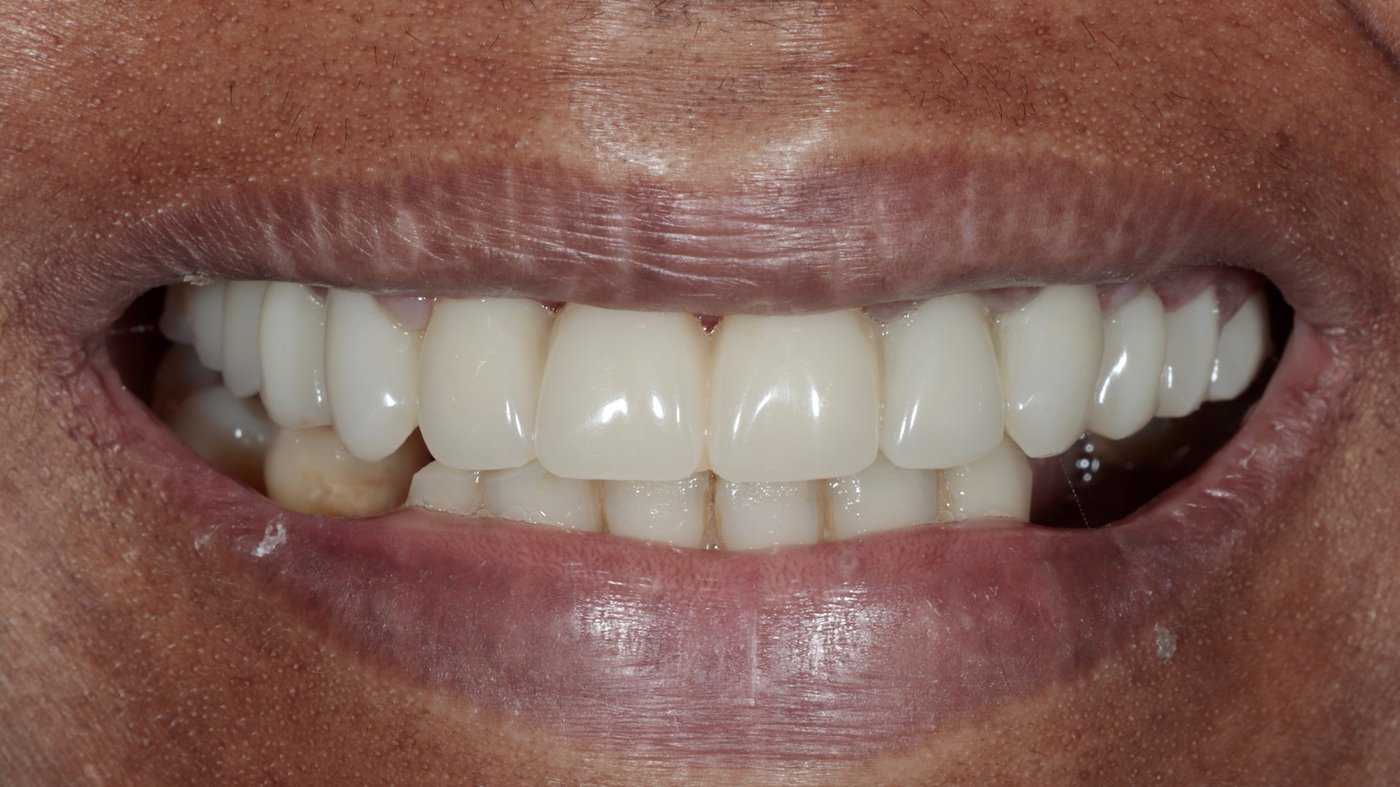
Severely worn, fractured residual dentition — and the immediate provisional restoration, photographed at 15 days.
That second photo is the provisional restoration, not the final one. That distinction matters more than it might seem, so it's worth being explicit about it rather than letting the photo speak entirely for itself.
What "immediate" actually refers to
In an immediate loading protocol, the fixed provisional restoration is delivered the same day as implant surgery, rather than weeks or months later while the patient waits with a removable temporary or no teeth at all. What's shown at 15 days here is that provisional, doing exactly what a provisional is supposed to do: restoring function and a natural appearance immediately, while quietly shaping the soft tissue toward the profile the final restoration will inherit.
This isn't a lesser version of the final result released early. It's a specific, separate piece of clinical work — designed, fitted, and adjusted with its own precision — that happens to also serve as the foundation for what comes next.
Why speed here isn't a shortcut
Getting from the "before" photo to the "after" photo in 15 days requires more upfront precision, not less. The implant positions have to be planned digitally before surgery, backwards from the final tooth position, because there's no room to improvise once the provisional is being fitted the same day. The provisional itself has to be shaped correctly on day one, because it's the tissue's template from that point forward — get its contour wrong and you're fighting the soft tissue for months instead of guiding it.
Slower isn't automatically safer here. A drawn-out timeline can just as easily reflect a less structured plan as a more careful one. What actually determines the outcome is whether the position, the tissue management, and the provisional's design were right on day one — not how many months passed before the patient saw a result.
What the 15-day mark is, and isn't, evidence of
It's evidence that the surgical planning was accurate enough, and the provisional well-made enough, to produce a natural, functional result almost immediately. It is not evidence of long-term stability — that's a different claim, and one I'd want to make from a 3-year or 7-year photo, not a 15-day one. Same-day results and long-term results answer different questions, and treating a fast provisional as proof of a durable outcome is exactly the kind of overreach that makes "same-day" sound suspicious in the first place.
Full-Arch FP1 case documentation — from immediate provisional to long-term outcomes at follow-up.
View Case Documentation →